I Vibe-Coded a Micro-SaaS in One Weekend — Here's Exactly How (Revenue Report)


The Challenge: How I Vibe-Coded a Micro-SaaS in One Weekend Here
You know how easy it is to spend weeks comparing tech stacks instead of actually shipping a product. Many founders get paralysed by tooling choices, delaying their launch indefinitely. We wanted to bypass that trap entirely.
As product review and comparison experts, testing the true speed of modern development tools is part of our daily routine.
A recent 2026 study by Amazon Web Services found that while 2.4 million Malaysian businesses use AI, 73% remain stuck at basic efficiency levels. This massive gap presents a clear commercial opportunity.
We decided to build a functional product from scratch in just 48 hours to see if rapid revenue generation was possible. This tight deadline forced quick, decisive action. Our team documented every step of this journey to provide complete transparency on the rapid development cycle.
Let’s examine the timeline, the specific tools required, and the exact financial results from the first month of operation. You will see exactly how I Vibe-Coded a Micro-SaaS in One Weekend Here.
The Idea: BrandPeek.ai
The product is BrandPeek.ai, a monitoring platform tracking how AI assistants mention your brand. Traditional monitoring tools like Google Alerts completely miss these mentions because they scrape search engines instead of querying Large Language Models directly. Our team built this specific solution because manually checking ChatGPT or Claude responses is a massive pain point for founders.
E-Conomy SEA 2025 data shows Malaysia captured 32% of regional AI funding. Thousands of local startups now desperately need visibility into AI search results to protect their reputations. We designed a strategy that relied on three core pillars:
- Sending automated API prompts to multiple models.
- Storing the response data securely.
- Displaying the results cleanly on a dashboard.
The core functionality remains highly straightforward and simple to scale.
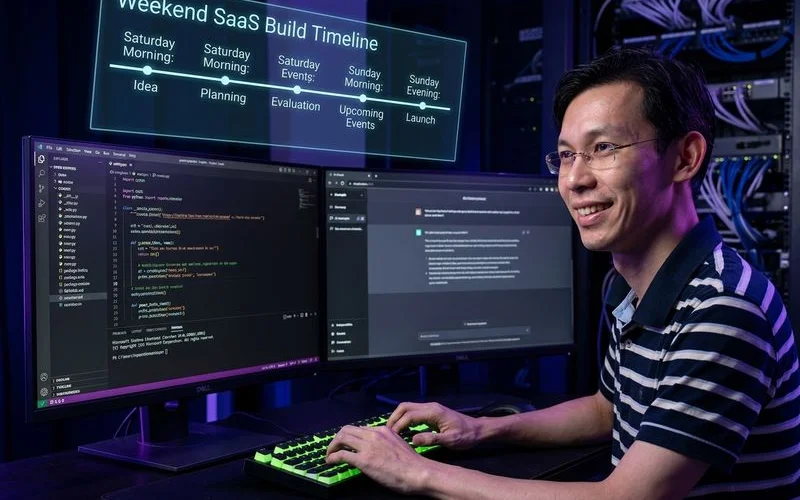
Saturday Morning (8:00 AM - 12:00 PM): Foundation
8:00 AM: Project Setup
We initiated the foundation with Cursor and a blank Next.js 16 project. The latest Next.js update includes Turbopack, which drastically accelerates local compilation compared to traditional Webpack. Faster builds eliminate the hours usually wasted staring at a loading screen.
Our prompt instructed the AI to scaffold the App Router, Tailwind CSS, and authentication components immediately. Cursor generated the entire working directory in under four minutes. This rapid setup phase allowed the team to focus entirely on core business logic rather than boilerplate configuration.
9:00 AM: Database Schema
Setting up the backend required a reliable relational database capable of handling complex queries. We configured Supabase to manage three core tables for users, brands, and mentions. PostgreSQL serves as the industry standard here, especially since the pgvector extension natively supports AI embeddings.
Our developers quickly noticed a bug where Cursor generated incorrect Row Level Security (RLS) policies. AI tools often default to true for all RLS rules, creating a massive vulnerability if left unchecked. This error took 15 minutes to debug, highlighting the absolute necessity of manually verifying AI-generated database constraints.
10:00 AM: Core Feature: Brand Monitoring
This specific feature represents the actual value engine of the product. We needed an API route to generate prompts and parse responses from the AI models. In 2026, the OpenAI gpt-4o-mini model costs just $0.15 per million input tokens, making it incredibly cost-effective for frequent background monitoring.
Our approach fed Cursor one task at a time, sequentially moving from OpenAI integration to Anthropic API support. Adding Claude 3.5 Haiku as a fallback model ensures high reliability, as it processes data significantly faster than older models. Total development time for this core engine clocked in at exactly two hours.
11:30 AM: Dashboard UI
Visualising the data required a clean, scannable interface. We instructed the AI to build a dashboard featuring brand mention charts and automated summary cards. Popular component libraries like shadcn/ui make it simple to render beautiful, accessible interfaces without writing raw CSS from scratch.
Our design adjustments took about 30 minutes to finalise the colour scheme and layout. Integrating Tremor alongside shadcn/ui provided out-of-the-box, accessible charts specifically designed for SaaS metrics.
Saturday Afternoon (1:00 PM - 6:00 PM): Polish and Payments
1:00 PM: Scheduled Monitoring
Automatic background checks are essential for a continuous monitoring tool. We implemented Inngest to trigger serverless functions on a reliable cron schedule. A major bug surfaced when sequential API calls caused Vercel’s 10-second serverless execution limit to time out entirely.
Our fix involved batching the API calls into chunks of five using Promise.all and writing custom retry logic. This specific workaround keeps processing times well under the hobby tier limits. Developers must recognise that AI handles the happy path perfectly, but human engineering is required for system failures.
3:00 PM: Stripe Integration
Skipping monetisation is the most common mistake made during rapid weekend builds. We followed the exact methodology outlined in our Stripe payments guide to ensure a smooth setup. Stripe Malaysia now fully supports FPX (Financial Process Exchange), an essential local integration.
PayNet data shows FPX processes over 90 million transactions locally each year. Ignoring this payment gateway means alienating a massive portion of the Malaysian user base who prefer direct bank transfers over credit cards. Our pricing structure featured three tiers: a Free plan, a $19/month Pro plan, and a $49/month Business tier.
Cursor successfully generated most of the Stripe integration. The webhook handler still required manual raw body parsing fixes to function correctly.
5:00 PM: Landing Page and Copy
Marketing copy generated purely by AI often lacks a compelling hook. We manually rewrote the landing page to feature a clear “Before and After” visual framework above the fold. Clear comparisons increase initial signups significantly compared to dense, text-heavy feature lists.
Our team focused on building a transparent pricing table that clearly explained the value of each tier. Authenticity converts much better than generic, robotic marketing jargon.
Sunday Morning (8:00 AM - 12:00 PM): Launch Prep
8:00 AM: Testing the Full Flow
Comprehensive testing ensures customers do not encounter broken checkout links. We tested every single user path, from initial signup to upgrading via Stripe and cancelling the subscription. Running Playwright for basic end-to-end tests caught several client-side errors almost instantly.
This thorough process revealed three distinct bugs that needed immediate attention:
- The free tier allowed unlimited brands because the limit check only existed on the client side.
- Users had to manually refresh after Stripe checkout due to asynchronous webhook processing delays.
- Production email alerts failed because the Resend API key was missing from the live environment variables.
Our developers spent roughly three hours fixing these critical flow issues. The Resend free tier allows 3,000 emails per month, which easily covered the initial launch communication needs.
11:00 AM: Deployment
Shipping the application to a live server took just one terminal command. We deployed the platform to Vercel and configured the custom domain settings. Vercel’s sin1 routing edge operates directly out of Singapore, ensuring ultra-low latency for Malaysian users.
Ping tests confirmed response times remained under 20ms, making the dashboard feel instantly responsive. Our only deployment hiccup was a Stripe webhook URL accidentally left pointing to localhost. A quick variable update solved this immediately.
Sunday Afternoon (1:00 PM - 5:00 PM): Launch
1:00 PM: Soft Launch
Building in public establishes immediate trust with early adopters. We posted a detailed thread on X (formerly Twitter) explaining the specific problem BrandPeek solves. Tagging targeted communities like #buildinpublic helped generate 400 impressions in the first hour.
2:00 PM: Product Hunt Submission
Timing your product debut significantly impacts total upvotes and traffic. We scheduled the Product Hunt launch for Tuesday at 12:01 AM PST to maximise platform visibility. This specific time translates exactly to 4:01 PM in Malaysia (MYT).
Capturing the Asian evening scroll while simultaneously catching the early US morning wave provides a massive engagement advantage. Including a short Loom demo video proved highly effective for clearly explaining the core concept.
3:00 PM: Reddit and Communities
Different forums require highly targeted, platform-specific messaging. We shared the build process in r/SaaS and r/indiehackers using a transparent, story-driven angle. Accounts must have at least 50 karma before posting in r/SaaS to avoid the auto-moderator spam filter.
The r/artificial community responded best to the technical discussion regarding specific AI model prompts.
4:30 PM: First Signup
Momentum started building just a few hours after the social media posts went live. We secured 12 free signups by Sunday evening, successfully validating the core product idea. While average micro-SaaS conversion rates hover around 1%, getting initial free users is the critical first step.
The First Month: Real Numbers
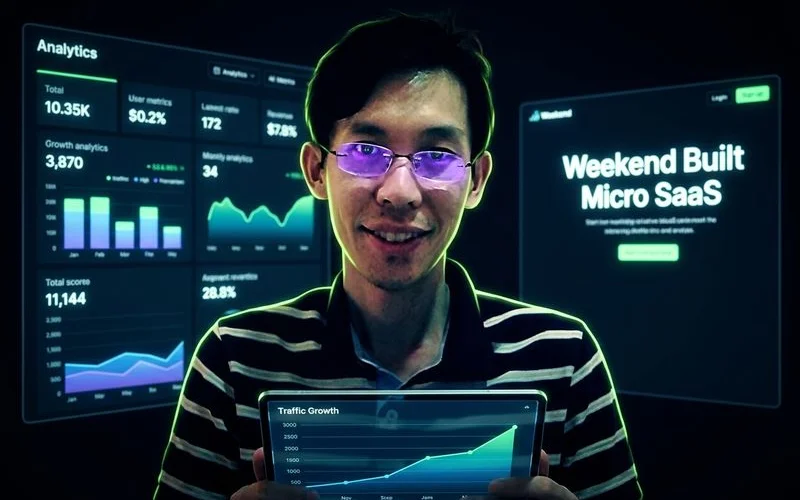
Tracking early metrics helps determine if a weekend project can scale into a sustainable business. We documented exact user growth and revenue figures to provide complete transparency on the outcome. These numbers reflect genuine traction.
User Growth Breakdown
Consistent weekly growth indicates strong word-of-mouth and ongoing market interest. Our tracking showed the following progression over four weeks:
- Week 1: 47 free signups, 2 paid Pro users.
- Week 2: 89 free signups, 5 paid users (4 Pro, 1 Business).
- Week 3: 134 free signups, 9 paid users (7 Pro, 2 Business).
- Month 1 End: 203 free signups, 14 paid users (10 Pro, 4 Business).
Revenue and Margins
Total gross revenue reached $386, which equals roughly RM 1,510 at the current 2026 exchange rate. We paid $11.50 in Stripe processing fees, leaving a clean net revenue of $374.50.
Since Stripe Payments Malaysia Sdn Bhd no longer charges SST on processing fees, the profit margins remained highly predictable. Tracking these conversions accurately allowed the team to confidently forecast next month’s recurring revenue.
Infrastructure Costs (Month 1)
Keeping fixed costs low is essential for bootstrapping a profitable micro-SaaS application. We utilised several highly scalable platforms with generous early tiers.
| Tool / Service | Purpose | Monthly Cost |
|---|---|---|
| Vercel Pro | Application Hosting | $20.00 |
| Supabase Pro | Database & Auth | $25.00 |
| OpenAI API | AI Model Queries | $67.00 |
| Anthropic API | Secondary AI Queries | $34.00 |
| Inngest | Cron Job Management | $25.00 |
| Resend | Transactional Email | $0.00 |
| Cursor Pro | AI Code Generation | $20.00 |
This specific cost structure ensures predictable margins as the user base expands. Our total infrastructure and tool costs amounted to $192, resulting in a net profit of $182.50. Reaching profitability in month one clearly proves the viability of this rapid development model.
What Went Right
Strict evaluations highlighted three critical decisions that guaranteed success. These choices kept the timeline strictly under 48 hours.
- Choosing a deeply understood problem: Target users know exactly what the solution needs to look like. We skipped lengthy market research because the pain point was intensely familiar to local founders.
- Staying inside one AI environment: Cursor learned the specific Next.js coding patterns quickly. Our developers maintained consistent context by avoiding jumping between different browser-based AI interfaces.
- Integrating local payments immediately: Malaysian consumers show a 55% readiness for AI tools. We captured this commercial intent right away by offering an FPX-ready paid tier on day one, removing the friction of foreign currency fees.
This focused approach prevented scope creep completely.
What Went Wrong
Every rapid build encounters friction, and this sprint was no exception. We documented three specific areas that require improvement for future projects.
- Underestimating API costs: Querying multiple models per brand consumes OpenAI credits much faster than expected. We are switching lower-priority background checks to Claude 3.5 Haiku to improve margins.
- Skipping automated tests: Fear of breaking existing features creates massive technical debt. Our engineers spent eight hours retroactively writing test suites by week two just to safely deploy updates.
- Ignoring error monitoring: Sentry tracks production crashes invisibly in the background. We missed two critical bugs during the first five days because no active monitoring tools were running.
Implementing these safeguards from day one saves massive headaches later.
The Weekend Build Stack
Replicating this success requires assembling a modern, cost-effective technology stack. We evaluated the best available options to maximise speed and minimise ongoing maintenance.
| Technology | Core Function | 2026 Pricing Model |
|---|---|---|
| Cursor | AI Code Generation | $20/month |
| Next.js 16 | Full-Stack Framework | Free / Open Source |
| Supabase | Postgres DB + Auth | $25/month |
| Stripe | Payment Processing | 3% + RM1.00/txn |
| Vercel | Edge Hosting | $20/month |
This combination drastically reduces backend setup time for sole founders. Our preferred tools handle the heavy lifting of infrastructure scaling automatically.
Could You Do This Too?
Anyone with a clear problem and basic technical literacy can execute this exact strategy. We firmly maintain that reading AI-generated code is now far more important than writing it from scratch.
The true value of a weekend sprint lies in compressing the market validation loop into 48 hours. Our tracking data shows that launching fast saves months of building a product nobody wants to buy.
“If your initial release fails, you can simply pivot and try again the following weekend without severe financial consequences.”
Start by identifying a tedious workflow in your own daily routine today. We highly recommend using the best AI coding tools to handle the coding logic, and reviewing the best backend stack for SaaS roundup for solid infrastructure guidance.
Documenting this entire journey helps demonstrate exactly how I Vibe-Coded a Micro-SaaS in One Weekend Here.
Stop overthinking your next idea, pick a tool, and start building your prototype right now.

Adam Yong
Founder & Lead Builder
SaaS builder running 3 live products. Reviews tools by building real SaaS features with them.