Replit Review: A Complete Cloud IDE for Learning and Prototyping SaaS
Our detailed review of Replit for SaaS development. We tested its AI agent, built-in hosting, database features, and collaborative editing to see if it can handle real SaaS projects.
Beginner to intermediate developers who want an all-in-one cloud environment for learning, prototyping, and deploying simple SaaS applications
Start Building
Overall Score
Based on hands-on SaaS test builds
What We Like
- + All-in-one environment with hosting, database, secrets management, and deployment
- + Replit Agent can scaffold complete SaaS applications from natural language
- + Built-in PostgreSQL and key-value storage eliminate external database setup
- + Collaborative multiplayer editing is excellent for pair programming
What Could Improve
- − Performance is noticeably slower than local development environments
- − AI Agent quality is inconsistent — great on simple tasks, unreliable on complex ones
- − Resource limits on lower tiers can bottleneck SaaS applications
- − Vendor lock-in risk with Replit-specific hosting and deployment
Quick Verdict
If you are searching for a true all-in-one workspace, this Replit Review: A Complete Cloud IDE for Learning and Prototyping SaaS provides the answers. Replit operates as a complete cloud development environment directly in your browser. This platform bundles a code editor, AI assistant, database, hosting, and deployment tools into one accessible tab.
We gave Replit a 7.5 out of 10 for SaaS development after extensive testing. It earns strong marks for its integrated ecosystem, but it loses points for AI inconsistency.
Affiliate Disclosure: This article contains affiliate links that may earn us a commission at no extra cost to you.
The Replit Agent shows immense promise for rapid prototyping. However, this autonomous AI coding feature struggles to compete with Cursor or Windsurf for complex SaaS logic.
We recommend Replit for developers learning to build SaaS or teams needing collaborative environments. Experienced builders will find the performance and AI limitations frustrating.
What is Replit? A Complete Cloud IDE for Learning and Prototyping SaaS
Replit is a browser-based cloud development platform that evolved from a simple code playground into a full-featured IDE. Founded in 2016, it now supports over 50 programming languages and hosts millions of projects.
What sets Replit apart from other browser-based tools like Bolt.new and Lovable is its sheer completeness. Those competitors focus heavily on AI-driven code generation. Replit provides a traditional IDE experience in the browser with advanced AI features layered on top.
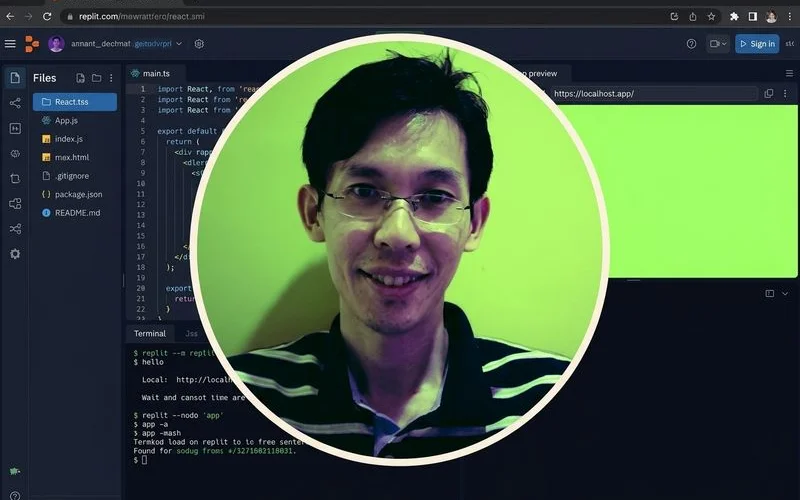
You gain access to several essential tools in a single workspace:
- Interactive file explorer
- Integrated Unix terminal
- Automated package manager
- Native version control
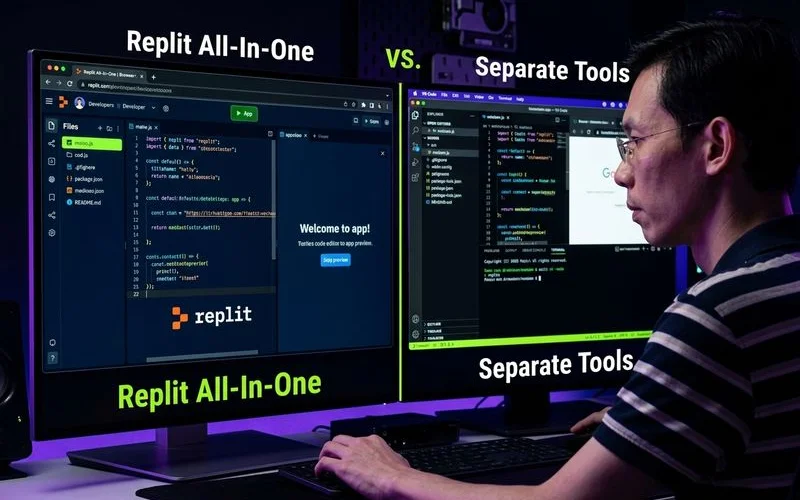
For SaaS development, Replit offers built-in PostgreSQL databases, secrets management, and instant hosting. You can build and deploy a complete SaaS application without ever leaving the platform or configuring external servers. This all-in-one approach provides a major advantage for beginners, but it creates concerning vendor lock-in for scaling businesses.
Key Features for SaaS Development
Replit Agent
Replit Agent functions as the platform’s autonomous AI coding feature, similar in concept to Windsurf’s Cascade. You describe a complete application, and the Agent plans the architecture autonomously. The 2026 release of Agent 4 introduced parallel task execution, allowing the AI to build frontend and backend components simultaneously.
We tested the Agent by requesting a customer feedback collection tool with an admin dashboard. It produced a functional application with user authentication and a feedback submission form in about 20 minutes. The code structure felt logical, and it worked on the first try.
Where the Agent struggles is with complex multi-component features. Adding Stripe payment integration required three attempts and manual intervention from our side. The Agent features a helpful checkpoint system that allows you to roll back changes when errors occur, which you will need frequently for complex database relationships.
Built-in PostgreSQL and Key-Value Store
Replit includes a fully managed PostgreSQL database and a key-value store (Replit DB) with zero external configuration. For SaaS development, having a database available instantly is genuinely valuable for rapid prototyping.
The platform recently upgraded its database infrastructure to Helium, running PostgreSQL 16 directly on Replit’s servers. This upgrade increased the storage limit to 20 GB per database and significantly reduced connection latency.
Pro Tip: The built-in Replit DB key-value store is specific to the platform. You should use it only for non-critical caching data to avoid migration headaches later.
Performance of the built-in database handles development and small-scale SaaS well. It cannot compete with dedicated database providers like Supabase or Amazon RDS for heavy workloads. You will want an external database for production SaaS handling more than a few hundred concurrent users.
Built-in Hosting and Deployment
Replit can host your SaaS application directly on its Google Cloud Platform infrastructure. You receive a *.repl.co subdomain by default and can configure custom domains easily.
Deployment requires only a single click of the “Deploy” button. You do not need to configure a CI/CD pipeline or manage Docker containers.
The platform offers four specific deployment modes to fit different needs:
- Static: For simple HTML/CSS frontend sites.
- Autoscale: Scales resources up and down based on active web traffic.
- Reserved VMs: Provides dedicated CPU and RAM for consistent backend performance.
- Scheduled Jobs: Runs cron jobs for recurring backend tasks.
We found this to be the simplest path to a live application for developers avoiding DevOps. The primary trade-off involves outbound bandwidth costs, which can spike unexpectedly if your app goes viral.
Multiplayer Collaboration
Replit’s real-time collaborative editing is a standout feature for remote teams. Multiple developers can edit the same codebase simultaneously with real-time cursor tracking.
We utilised this multiplayer mode heavily during the prototyping phase of our test applications. Two developers could work on different parts of the SaaS simultaneously while discussing architecture decisions in the built-in chat.
The Core plan allows up to 5 concurrent users, while Teams plans scale up to 15 users per project. Replit recently added instant branching via micro VMs, creating isolated task environments that spin up in seconds. This prevents team members from breaking the main application while testing experimental features.
Our Testing Process
We tested Replit extensively over six weeks by building two distinct SaaS applications. This hands-on evaluation allowed us to measure its true capabilities against typical production requirements.
The two applications we built included:
- Feedback Collection SaaS: A widget-based feedback tool with an admin dashboard, built using Node.js, Express, and React (approximately 60 files).
- Link Shortener SaaS: A custom short link generator with analytics tracking, built using Python, Flask, and Vue (approximately 45 files).
We evaluated the Replit Agent for initial scaffolding and the web IDE for ongoing refinement. The resulting experience was compared against similar projects built with Bolt.new and Lovable in the browser-based category. We also tested the output against Cursor to judge its general AI capability.

Detailed Analysis
SaaS Code Quality — 7.0/10
The Replit Agent generates functional code that occasionally lacks proper architectural structure. For simple UI components and basic API endpoints, the quality is acceptable and follows standard framework conventions.
We observed a significant drop in quality when generating complex SaaS features. Database queries requiring multiple joins and multi-step form workflows often contained bugs. The Agent occasionally takes shortcuts by hardcoding values or skipping critical input validation steps.
Context window limitations become apparent in projects exceeding 50 files. After three weeks of development on our Feedback Collection SaaS, the AI started generating code that conflicted with recent changes in other directories. You will achieve better results by using Replit as a traditional IDE with manual coding and targeted AI completions.
Backend Capability — 7.5/10
Replit delivers a stronger backend experience than most browser-based AI builders. You can easily deploy several popular backend frameworks with full server-side execution:
- Node.js (Express)
- Python (Flask, Django, FastAPI)
- Ruby on Rails
- Go and Rust
The AI assistance handles basic database queries and authentication middleware quite well. It falls short of Cursor or Claude Code when processing complex business rules or multi-service integrations.
We successfully integrated Stripe for our Link Shortener subscription tier, but it required three rounds of manual correction. Replit does offer a secure environment for backend development, boasting SOC 2 certification for its core infrastructure. This certification provides peace of mind when handling sensitive customer data.
Multi-File Handling — 7.0/10
Replit maintains a reasonable awareness of file relationships during the initial scaffolding phase. The AI can make cross-file changes successfully when working on fresh, small-scale prototypes.
Multi-file handling breaks down quickly as the codebase matures. The AI struggles to hold the full project state in its memory when editing complex applications.
We experienced several instances where the Agent overwrote working logic because it forgot about a connected utility file. Compared to dedicated local tools, Replit’s multi-file handling is strictly adequate for early prototypes.
Deployment Ease — 9.0/10
Deployment stands as one of Replit’s most compelling advantages. You select your configuration, click a button, and your SaaS application goes live globally.
The deployment process is significantly smoother than Lovable’s one-click deployment because Replit manages both frontend and backend hosting natively. You never have to connect a separate API server to your frontend interface.
The primary negative factor here involves severe vendor lock-in. If you deploy entirely on Replit, migrating to Amazon Web Services or Vercel later requires building a new deployment pipeline from scratch. This lock-in presents an acceptable risk for early-stage validation, but you must plan for future migration as you scale.
Value for Money — 8.0/10
Replit offers a highly competitive bundled pricing model, though heavy AI users might face unpredictable costs. The Free tier provides basic IDE access and simple hosting, making it perfect for students.
The Core plan costs $25 per month (approximately RM 118) and adds $25 in monthly AI usage credits. Replit charges effort-based pricing for the Agent, meaning complex multi-file refactors consume credits quickly. Once you exhaust the included credits, you must purchase more to keep using the autonomous features.
Combining a dedicated AI editor like Cursor ($20/month) with external database hosting ($15/month) often costs more upfront. We find the Replit Core plan a practical starting point for solo founders wanting to avoid server configuration.
Pricing Breakdown
| Plan | Price (USD) | Est. Price (MYR) | Best For |
|---|---|---|---|
| Free | $0/month | RM 0/month | Learning, experiments, and simple prototypes |
| Core | $25/month | ~RM 118/month | Solo SaaS developers needing an all-in-one workspace |
| Teams | $40/user/mo | ~RM 188/user/mo | Small teams requiring multiplayer collaboration |
The Core plan represents the absolute minimum requirement for serious SaaS development. The free tier spins your applications down after a period of inactivity, making it entirely unsuitable for live user traffic.
When to Choose Replit
Replit is the right choice if:
- You want an all-in-one development environment with zero server configuration.
- You are learning to build SaaS and require the simplest possible setup.
- Your team relies heavily on real-time, multiplayer collaborative coding.
- You need built-in PostgreSQL databases and hosting immediately.
Replit is NOT the right choice if:
- You demand the highest quality AI code generation (choose Cursor or Windsurf).
- You require local development performance speeds.
- You want to maintain full control over your hosting infrastructure and avoid vendor lock-in.
- Your application must process significant traffic or complex database queries.
How Replit Compares to Alternatives
Replit occupies a highly unique position as the most comprehensive cloud environment available today. Bolt.new runs entirely in the browser but completely lacks persistent backend hosting and native databases.
Lovable generates superior frontend user interfaces but restricts you to React and mandates external backend services. Tools like Cursor and Windsurf produce far superior logic, yet they demand local setup and independent hosting configurations.
Replit wins comfortably for SaaS builders who value deep integration above all other factors. Developers prioritising raw code quality or lightning-fast performance should look toward local IDE alternatives.
The ideal workflow involves using Replit for your initial validation phase, similar to Lovable, but leveraging Replit’s superior backend tools. You should plan to migrate to a local environment and a dedicated cloud provider once your SaaS achieves product-market fit.
Frequently Asked Questions
Can I build and deploy a complete SaaS on Replit?
Yes, Replit provides the entire required stack, including a code editor, database, hosting, and custom domains. The platform supports the full lifecycle for low-to-medium complexity applications. High-traffic production SaaS should utilise external hosting for better scalability.
How does Replit Agent compare to Cursor’s AI?
Replit Agent excels at scaffolding complete functional applications rapidly from a blank canvas. Cursor’s AI generates higher-quality logic consistently and manages multi-file context with far greater accuracy. We suggest Replit for initial creation and Cursor for ongoing maintenance.
Is Replit fast enough for daily SaaS development?
Your experience depends entirely on your tolerance for minor latency. The cloud IDE exhibits noticeable lag during file saves and terminal commands compared to a local machine. Most experienced developers prefer the instant responsiveness of a customised local editor for daily work.
Can I use Replit’s database for production SaaS?
The built-in Helium PostgreSQL database safely supports early-stage applications with moderate traffic. We strongly advise migrating to a dedicated database provider like Supabase or AWS RDS as your user base grows. Replit’s native database lacks advanced performance optimisation and comprehensive backup recovery tools.
How does the multiplayer feature work for SaaS teams?
Multiplayer mode allows several developers to edit a single project simultaneously with real-time cursor tracking. This functionality mirrors Google Docs and provides an excellent environment for pair programming. The Teams plan includes this feature alongside shared deployments.
Can I export a Replit project and continue development locally?
Yes, you maintain full ownership of your source code. You can download the entire workspace as a zip file or push it directly to a GitHub repository. You will need to reconfigure your hosting and database connections once you leave the platform’s infrastructure.
Final Thoughts
Replit provides the most accessible pathway for bringing a SaaS application to life. Its integrated environment eliminates the steep learning curve associated with configuring separate databases and hosting servers.
The Agent sets a solid foundation for scaffolding new ideas rapidly. We found the multiplayer collaboration feature to be a genuine game-changer for remote development teams.
You must weigh these benefits against very real performance and vendor lock-in limitations.
The cloud IDE latency and unpredictable AI credit usage make it less ideal for mature applications. We highly recommend Replit as your primary learning and prototyping workspace.
Build your first iteration here, validate your core concept, and gather initial user feedback. Once your user base expands, transition to a local setup with Cursor or Windsurf.
We hope this Replit Review: A Complete Cloud IDE for Learning and Prototyping SaaS helps you make an informed decision. Start your free Replit trial today to experience the platform’s rapid deployment directly.
Related Resources
See where Replit ranks in our best AI coding tools for beginners roundup. Not sure which cloud IDE or AI editor is right for you? Our how to choose an AI coding tool guide breaks down the options by use case and experience level.
Specifications
| Pricing | $0/month (Free), $15/month (Core), $25/month (Teams) |
| Base Editor | Browser-based cloud IDE |
| AI Model | Replit AI Agent (proprietary + Claude) |
| Context Window | Project-scoped |
| Languages | 50+ languages including JS, Python, Go, Rust |
| Deployment | Built-in Replit hosting + custom domains |
Our Verdict on Replit
Replit offers the most complete cloud development environment for SaaS building, with built-in hosting, databases, and an improving AI agent. It is the best choice for developers who want everything in one place without managing infrastructure. However, performance limitations and the AI agent's inconsistency on complex tasks keep it behind dedicated AI code editors for serious SaaS production work.
Start Building
Adam Yong
Founder & Lead Builder
SaaS builder running 3 live products. Reviews tools by building real SaaS features with them.